

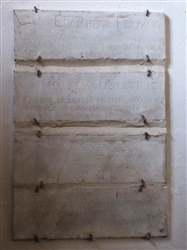
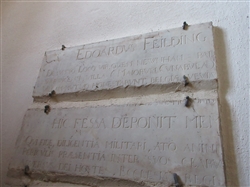
Feilding, Edward, Lt Col, Memorial Plaque
Military Rank:
Lieutenant Colonel
First Name:
Edward
Last Name:
Fielding
Memorial Type:
Memorial - Plaque
Does the monument still exist?
Yes
Installation Date:
Unknown
Inscription:
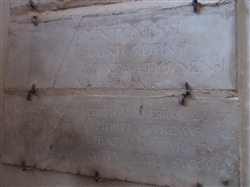
Edoardus Feilding de summo loco vir, quem Newnam-Padox, in agro Warwicensi, villa (majorum cunabula) atq; illa villam mutuo honestarunt, BeIgiae Sueviæ, imo totius Germaniae, nec non et charæ patriæ suæ honoribus onustus, hic sessa deponit membra:
Qui fide, diligentia, militari, atq; animi in summis periculis praelentia inter suos clarus, postquam adverlus
Dei hoſtes, ecclesiæ, Regis, legum, et bonorum omnium fortiter ac fæliciter se gesserit in prœliis.
Keintoniensi,
Brainfordiensi
Rounwaidounensi
Neuburiensi
quinq; tandem acceptis vulneribus, 20 die Septembris Anno Domini 1643 (meriti oppressus pondere, an fanguinis inopia fractus, futura est quaestio) non fine communi luctu fato succubuit suo.
Edward Feilding, a man of high rank, from the town of Newnam-Padox, in Warwickshire (the cradle of his ancestors) and that town mutually honoured. Burdened with the honours of Belgium, Swaibia, nay, of all Germany, and also of his dear country, here lays down his limbs:
Who, famous among his people for his faith, diligence, military prowess, and fortitude in the greatest dangers, after having been valiantly and happily engaged in five [sic] battles against the enemies of God, the church, the King, the laws, and all good things.
Keinton [Edghill]
Brainford [Brentford]
Rounwaidoun [Roundway Down]
Newbury
finally receiving wounds, on the 20th day of September in the year of our Lord 1643 (deservedly overwhelmed by the weight of his merit, or broken by want of blood, is the question to be asked) succumbed to his common fate without end in common mourning.
Allegiance:
Royalist
Condition:
Poor
Condition Description:
Though readable and in a relatively safe environment, it was broken into four parts at some point in it's history.
Memorial Notes:
Edward Fielding was lieutenant colonel in the royalist regiment of horse commanded by Henry Wilmot. He was the second son of William 1st Earl of Denbigh (d.1643). His brother, Basil, succeeded the earldom on his father's death and served Parliament as Major General of the associated counties in the West Midlands. Edward served in the Thirty Years war and, as his funerary epitaph shows, fought in the Civil War battles of Edgehill (1642), Brentford (1642), Roundway Down (1643) and first Newbury (1643), where he was killed.
Given the damage to the monument, it appears to have been forcibly removed from the University Church of St Mary's in Oxford where, according to Thomas Hearn, writing in 1774 (see Liber niger Scaccarii Vol II, p.582), Fielding was originally buried. When and why it was removed and reinstalled in the church at North Leigh is unclear.
Memorial Address:
St Mary's Church, North Leigh, Oxfordshire. OX29 6QJ
County:
Oxfordshire
Country:
England
Location within building:
Rear of church in a storeroom where electrical distribution boards are. Not far from font location.
Geoloation:
SP 38728 13655
Featured & Newly Added Memorials
Tipton Green, battle of, 1644, plaque
Feilding, Edward, Lt Col, Memorial Plaque
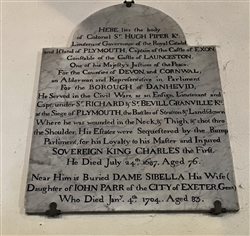
Piper, Colonel Hugh, Launceston
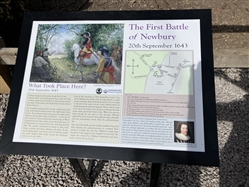
Newbury, first battle of, 1643, Lord Falkland information board